Six-Year-Old Girl Cares for Disabled Grandfather After being kicked out the house in Mukono
Mvulana Team
A six-year-old girl in Kitega Village, Mukono Central Division, Mukono District, has taken on the responsibility of caring for her disabled grandfather, who is struggling to find shelter and meet their basic needs after being asked to vacate the house they had occupied for years.
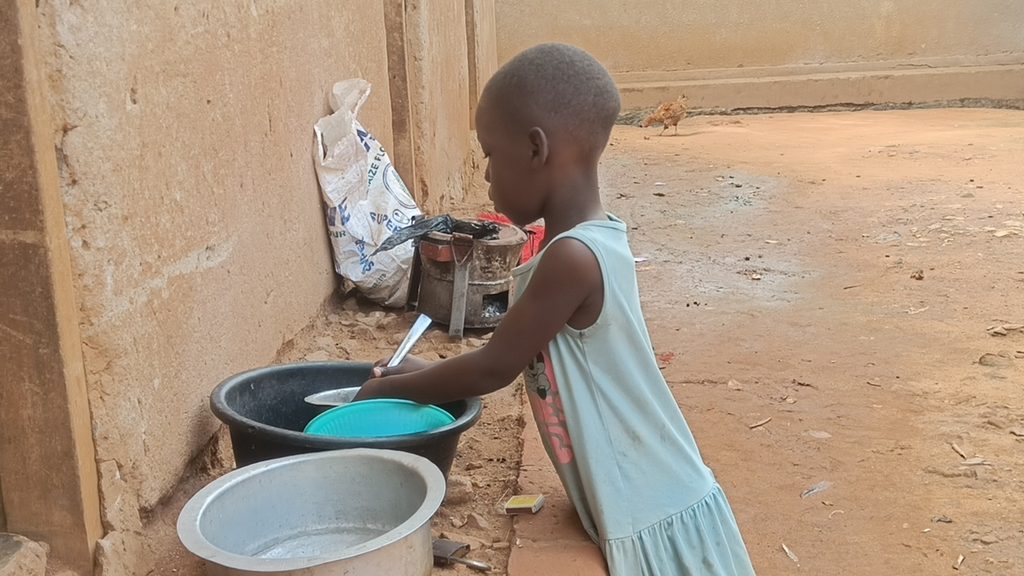
Patricia, who lives with her 62-year-old grandfather, James Kazibwe, was found performing household chores, including tending to a charcoal stove and washing utensils, despite her tender age.
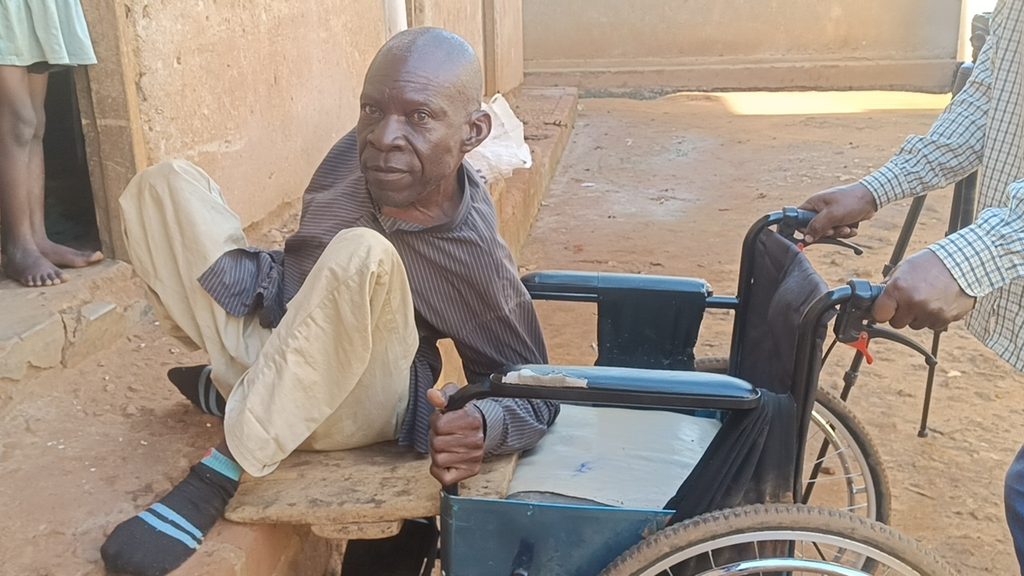
Kazibwe has disabilities affecting both legs and one arm, limiting his ability to move around and perform routine activities. The situation has left him increasingly dependent on the kindness of neighbours, who have been providing food and other basic assistance.
The family was given two months to vacate the house after Kazibwe failed to pay rent. They had lived in the property for more than a decade.
During a visit to Kitega Village, Patricia was seen trying to help her grandfather with household chores, raising concern among residents about the responsibilities the young girl has assumed while still at an age when she needs adult care and protection.
Kazibwe said Patricia’s mother had left the child in his care, but he no longer knew her whereabouts. He attributed her absence to problems with mental disorder.
With no reliable source of income and limited physical ability, Kazibwe said he was finding it increasingly difficult to provide for himself and his granddaughter.
“I am now depending on the kindness of people in the village, who have been giving me food because I can no longer manage to work as I used to,” he said.
Kazibwe previously earned a living repairing shoes, but an accident in which he broke the arm he used for the work left him unable to continue with the trade.
He said the loss of his livelihood had made it difficult to meet his daily needs and pay rent, leaving him with few options when his landlord asked him to leave.
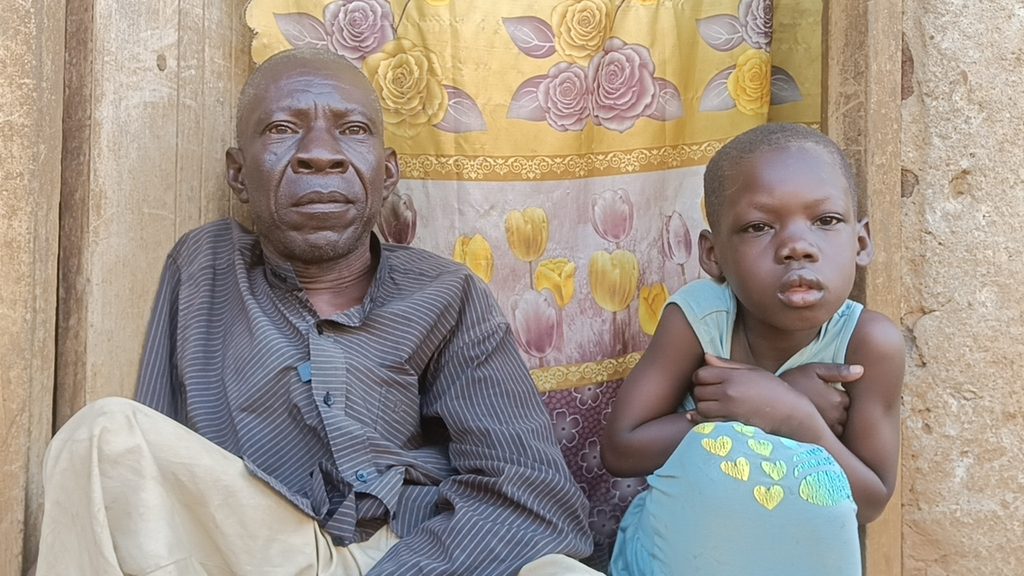
Although the landlord offered him an alternative space on which to construct a temporary shelter, Kazibwe said he lacked the money to buy construction materials and pay for the work.
“I do not have the money to put up the temporary house. I appeal to well-wishers to help me so that I can have somewhere to live with my granddaughter,” he said.
Landlord explains decision
Maureen Nakachwa, the landlord, said Kazibwe had lived in her house for 17 years, during which he paid rent for only three years.
She said she had allowed him to stay without paying rent for the remaining period, but her own financial circumstances had changed, forcing her to seek income from the property to support her children.
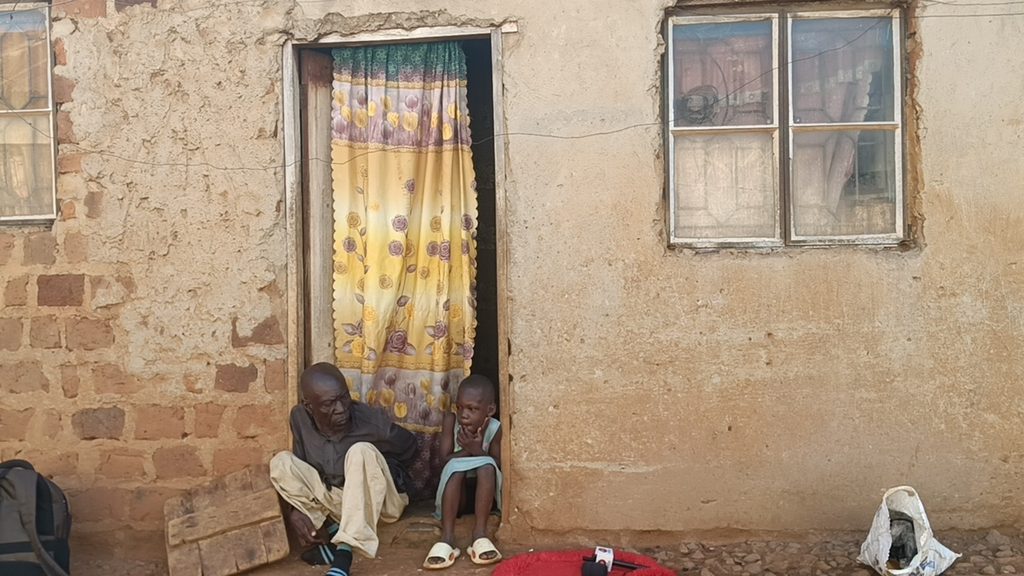
Nakachwa said Kazibwe had been given two months to vacate the premises and that she had offered him a space where he could construct a temporary shelter.
She showed the proposed site, but Kazibwe said he could not afford to put up a structure.
Nakachwa also appealed to well-wishers to assist him, acknowledging the difficult circumstances in which he and the young girl had found themselves.
Kazibwe’s monthly rent had been Shs80,000, an amount he said he could no longer afford following the accident that left him unable to work.
Residents seek intervention
Susan Mayanja Ssezibwa, the village women’s leader, said residents had tried to support Kazibwe by providing food and other assistance, but their resources were limited.
She said the community decided to publicise his plight to attract support from individuals, organisations and other well-wishers who might be able to help him secure shelter.
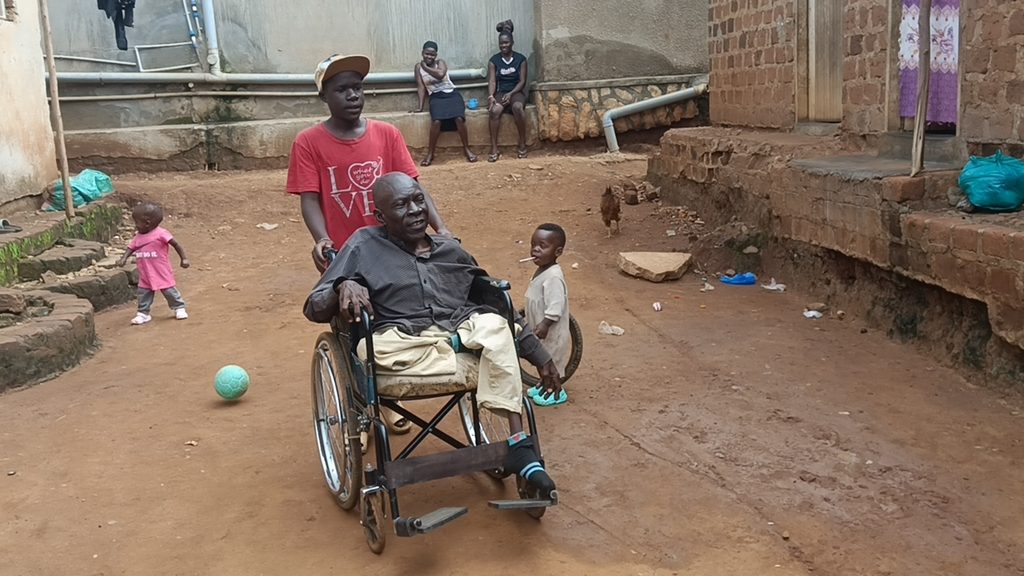
“We have tried to do what we can as a community, but our resources are limited. That is why we decided to bring his situation to the attention of the public so that other people who are able to help can come forward,” she said.
Mayanja Ssezibwa appealed for assistance to enable Kazibwe to construct a temporary house and improve the living conditions of Patricia, who has been helping him despite her young age.
Dan Magala, a resident, criticised local leaders and other authorities for what he described as their silence over the family’s plight.
He called on local leaders and other relevant authorities to intervene, saying the community alone could not adequately address the family’s needs.
Child’s welfare raises concern
Patricia’s situation has also raised questions about the welfare of children living in vulnerable households, particularly where an elderly or disabled caregiver has limited means of support.
According to the information gathered from residents, no authority has assessed Patricia’s welfare despite concerns about her living conditions and the absence of her mother.
Her grandfather’s physical limitations and financial difficulties have left the family struggling to secure stable shelter and meet basic needs.
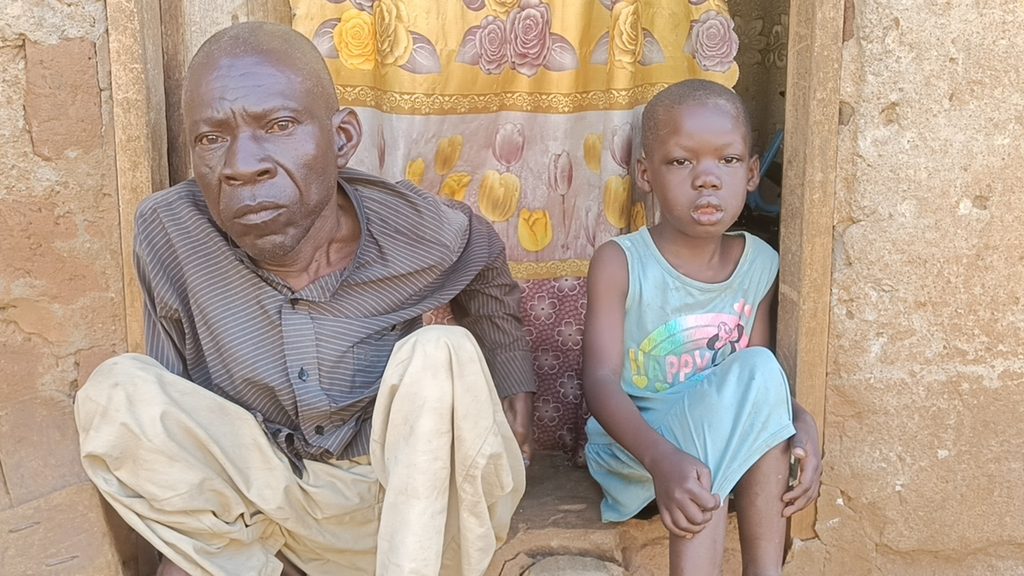
The immediate concern is to ensure that the pair has safe accommodation while Kazibwe receives assistance to establish a more sustainable living arrangement.
Residents are appealing to well-wishers, community organisations and relevant authorities to support Kazibwe and ensure that Patricia receives appropriate care and protection.
People willing to assist Kazibwe can contact him on 0757 116 016.
Ends